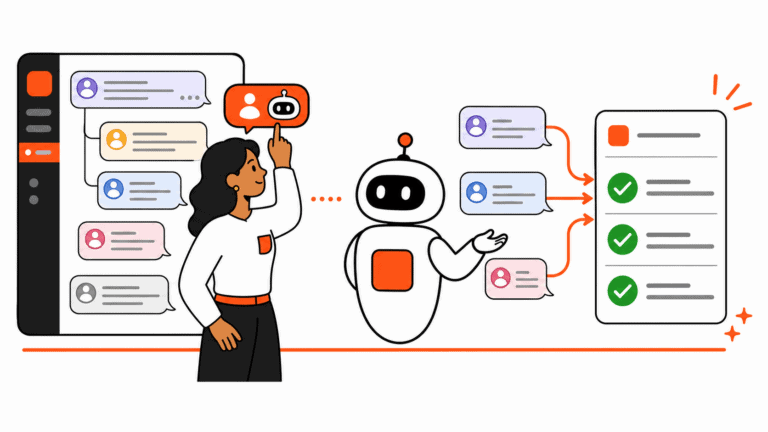
The review form asks for your biggest accomplishments. Your brain offers: attended meetings, answered messages, and somehow kept everything moving. Extremely helpful, brain.
Self-evaluation with AI is useful when you give the assistant evidence to organize. Start with work records, identify your actual contribution, and draft statements you can support. Asking AI to remember an entire year you have not supplied is a good way to get an impressive review for a fictional employee.
This five-step method helps you recover useful work that does not arrive with a trophy attached. The examples are fictional and show how to write accurately, not results you should claim as your own.
Self-evaluation with AI: collect facts before sentences
Start with your employer’s review form, criteria, and review period. UC Santa Barbara’s self-assessment guidance recommends reviewing goals and work records, then describing specific accomplishments and their impact. That is a useful foundation whether your review is annual, quarterly, or tied to a project.
You are not trying to list every task. You are looking for a few examples that explain what you contributed and why it mattered. A clear handover, an accurate report, or a recurring problem you helped resolve can belong in that conversation.
1. Find out what the review is actually asking
Copy the section headings into a private working document. Note the dates being reviewed, any word limits, and how your organization defines each rating. Do not ask an AI assistant to assign you a rating from vague notes.
- What outcomes or goals are being assessed?
- Does the form ask separately about collaboration or development?
- What evidence would support the examples you want to include?
- Which work happened inside the review period?
If a requirement is unclear, ask your manager before drafting around an assumption. A beautifully written answer to the wrong question is still the wrong answer.
2. Recover evidence from work you already did
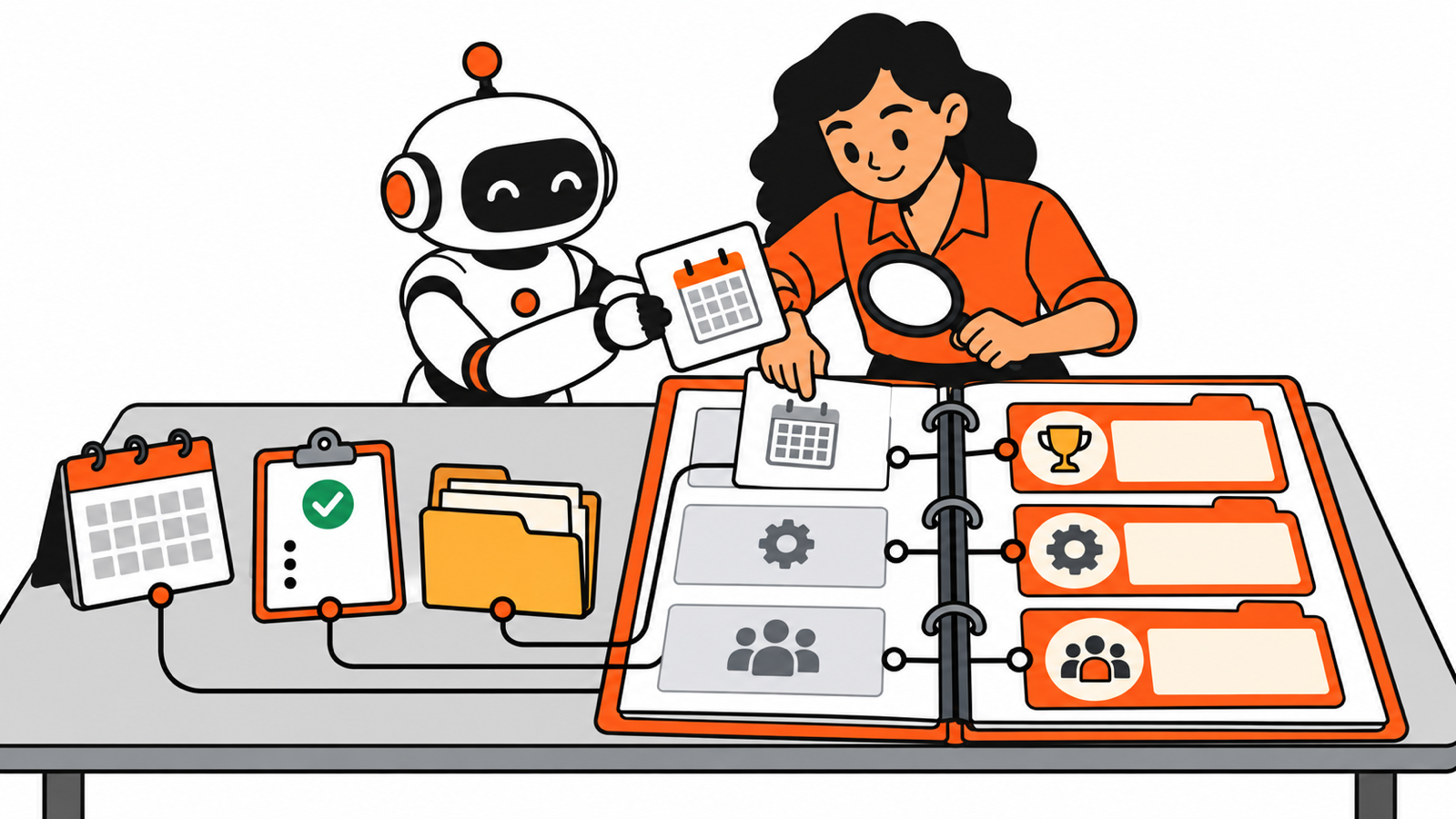
Look through records you are allowed to access: completed tasks, project notes, calendars, approved feedback, handover documents, or reports you produced. Record a short description and a reference you can find again. Keep confidential source material in its approved system.
Use a simple working list: the date or period, what happened, what you personally did, what changed, and the supporting record. Add “not measured” where you do not have a reliable number. Empty evidence is a research task, not an invitation to improvise.
Prompt to organize your notes:
Help me organize a self-evaluation for [review period] against these criteria: [criteria]. Use only the sanitized notes below. Group possible examples by criterion. For each, list my documented contribution, the stated outcome, and the source reference. Mark missing information as “needs verification.” Do not add achievements, numbers, dates, feedback, or responsibilities. Notes: [notes].
3. Separate the task from your contribution and its result
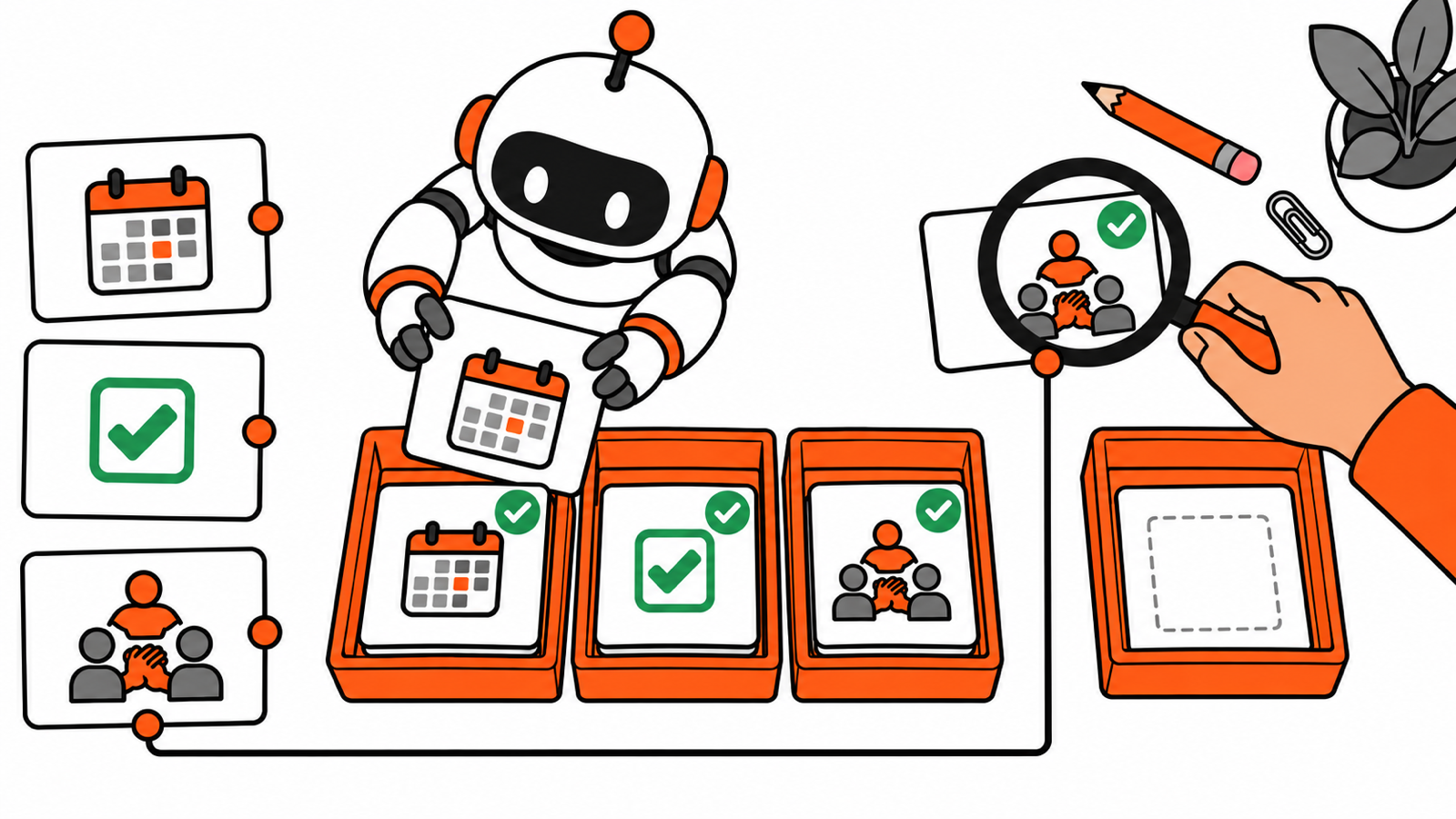
“Helped with onboarding” says little about what happened. A stronger statement explains your part without taking the whole team’s credit.
Illustrative raw note: “Joined the onboarding project. Wrote the handover checklist and shared the approved version.”
Grounded draft: “I documented the agreed handover steps and created the onboarding checklist used for the project handover. I incorporated the team’s review comments before sharing the final version.”
That sentence does not need a made-up time saving. If you have evidence that follow-up questions decreased, include the measured result and its source. If you do not, leave it out. Clear description is stronger than a suspiciously precise percentage.
Prompt to draft accomplishment statements:
Turn these verified notes into three concise accomplishment statements. Use this order: context, my contribution, supported outcome. Keep team achievements separate from my contribution. Use measured results only where I provide them. If impact is not documented, describe the completed work without guessing its effect. Avoid inflated verbs such as “transformed” unless the evidence supports them. Notes: [verified notes].
Self-evaluation with AI should make your work easier to understand, not larger than it was. Replace vague praise with a specific action a colleague would recognize.
4. Include one useful development goal
A review is also a place to explain what you want to improve and what support would help. Choose a real pattern you can work on. You do not need a theatrical confession or a disguised compliment such as “I care too much.”
UC Berkeley’s review preparation guidance includes both accomplishments and areas for improvement, as well as questions about support from the supervisor.
Illustrative development statement: “I want to make my project estimates clearer. For the next handover, I will separate the drafting, review, and approval stages in the plan, then compare the actual dates with the estimates. A check-in with the project lead would help me improve that process.”
Agree on the plan with the relevant person before presenting it as a commitment they have accepted. AI can suggest an action; it cannot promise your manager’s time.
5. Verify the draft against the records
Read the draft beside your evidence list. Check each statement, not just the impressive ones. You should be able to answer “What is this based on?” without opening a new chat to ask the model.
- Every example falls inside the right review period.
- Every number has a reliable source and the right unit.
- Your contribution is distinct from the team’s work.
- Feedback is quoted or summarized accurately and is appropriate to include.
- Planned work is not described as completed.
- The draft matches the form’s criteria and word limits.
Prompt for a final accuracy pass:
Compare this draft with the verified notes. Flag any unsupported claim, stronger wording than the evidence allows, invented number, implied team ownership, or future action written as completed. Do not fill gaps. Then suggest a shorter version that preserves all supported facts. Draft: [draft]. Verified notes: [notes].
Make the next review easier on future you
Self-evaluation with AI becomes less of a memory exercise when you keep a small work log. After a meaningful piece of work, record what happened, your part, the outcome you can support, and the source. A few useful entries beat a folder of screenshots with mysterious filenames.
If you already prepare a weekly status report, use it as an index to completed work. Before submitting the review, run the AI workslop check and remove language that sounds impressive but says nothing.
Keep the final judgment yours. Follow your workplace’s AI and confidentiality rules, use only approved tools, and replace sensitive details with neutral labels where possible. You do not need to upload a whole performance record to improve a paragraph.
Self-evaluation with AI is still your account of your work. Gather the receipts, tell the truth about your contribution, and make it easy for someone else to see why it mattered.