GPT-5.6 for operations is not a reason to let AI run your business unattended. It is a reason to get more deliberate about which work you delegate, which model you use, and where a human still needs to sign off.
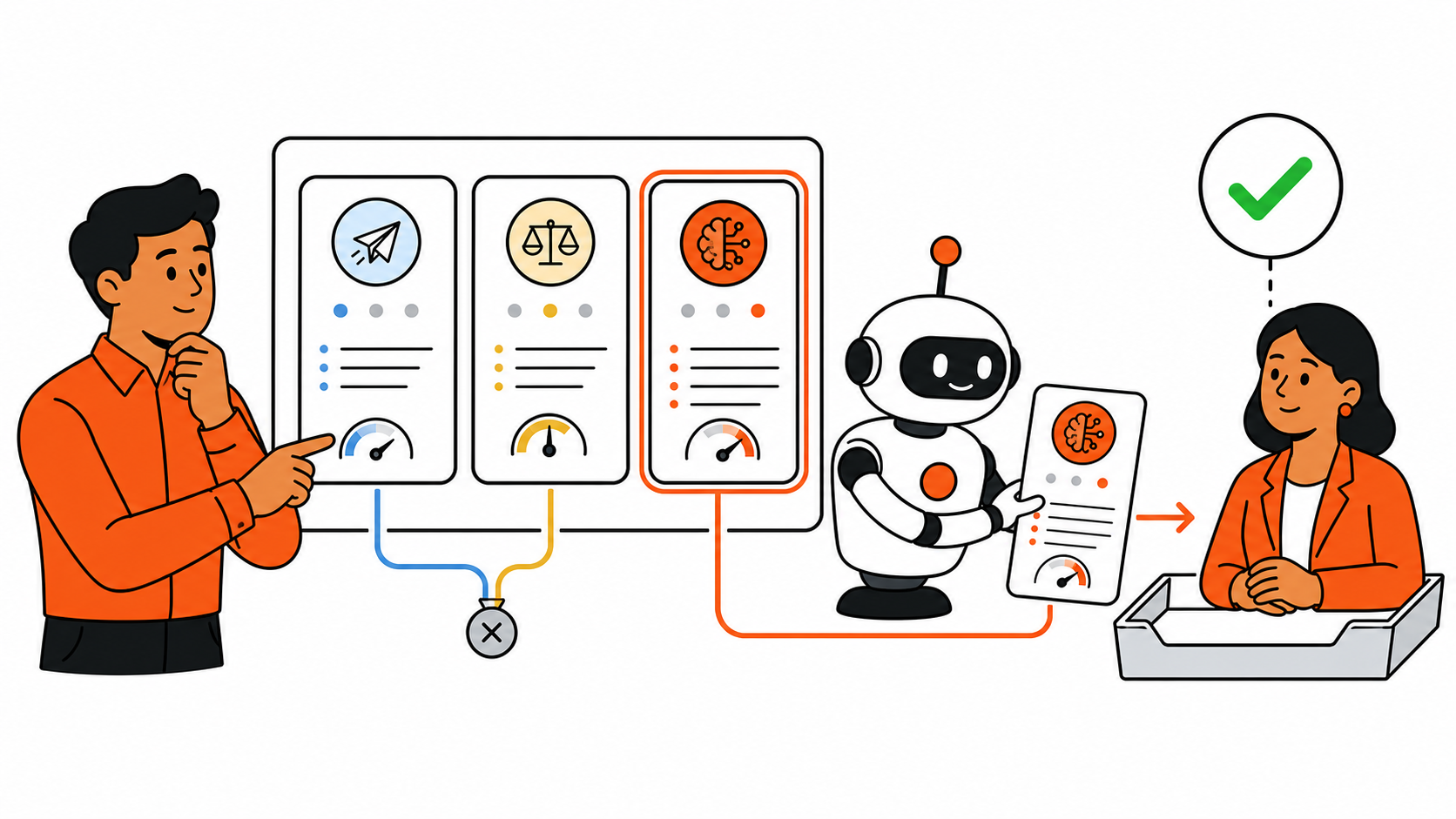
OpenAI released GPT-5.6 on July 9, 2026 as a three-model family: Sol, Terra, and Luna. Sol is the flagship, Terra is positioned as the balanced everyday-work tier, and Luna is the fastest, lowest-cost option. The useful change for an operations team is not “AI got smarter.” It is that you can now make a clearer trade-off between speed, cost, and the amount of review a task deserves.
That sounds less exciting than a robot replacing your team. It is also how you avoid buying an expensive new hammer and using it to send invoices without checking the amount.
For GPT-5.6 for Operations, that trade-off is the point: choose the smallest capable tier, then keep the review level matched to the consequence of a mistake.
What actually changed with GPT-5.6
GPT-5.6 is available across ChatGPT, Codex, and the OpenAI API. OpenAI says paid ChatGPT Work customers can choose among Sol, Terra, and Luna, while the API exposes all three tiers. For teams using the API, the published list price is $5 input / $30 output per million tokens for Sol, $2.50 / $15 for Terra, and $1 / $6 for Luna. Read OpenAI’s GPT-5.6 announcement and pricing.
Those are not “set it and forget it” models. OpenAI’s own AutomationBench results are a useful reality check: Sol scored 18.1%, Terra 15.2%, and Luna 14.9% on that tool-use evaluation. Benchmarks do not map neatly to your workflow, but the direction is clear: better models still need bounded tasks, good inputs, and review before an irreversible action.
The practical GPT-5.6 for operations rule
Match the model to the consequence of a wrong answer.
- Luna: fast first drafts, formatting, extracting structured fields from a clean source, and turning an approved checklist into a reusable template.
- Terra: daily operations work where context matters, such as comparing a few project updates, preparing a handoff brief, or spotting unanswered questions in a support queue.
- Sol: complex, multi-source analysis where the output is still reviewed by a person, such as a launch-risk register from meeting notes, a spreadsheet, and a project brief.
That is a recommendation based on OpenAI’s published tiering and pricing, not a claim that one model is “safe” and another is not. For GPT-5.6 for Operations, a cheap task that can hurt a customer is still a high-risk task.
3 operations tasks to delegate first
1. Turn updates into a handoff brief
Give the model a closed set of project notes or a Slack export and ask for four fields: decisions, owners, due dates, and unanswered questions. Do not ask it to decide the owner. Ask it to show you where the owner was already named.
This is a good first test because you can check the output against the source in a few minutes. It also pairs well with the workflow in our Claude Tag Slack guide: AI organizes the thread, but a person keeps the responsibility.
2. Build a weekly exception list
Operations teams do not need another dashboard that says everything is fine. They need the handful of things that changed, slipped, or stopped matching the plan.
Try a prompt that compares this week’s approved numbers or updates with last week’s, then returns only exceptions with a source link or quoted evidence. Have a human check the list before it goes to a client or leadership team.
3. Draft the boring first version of a process
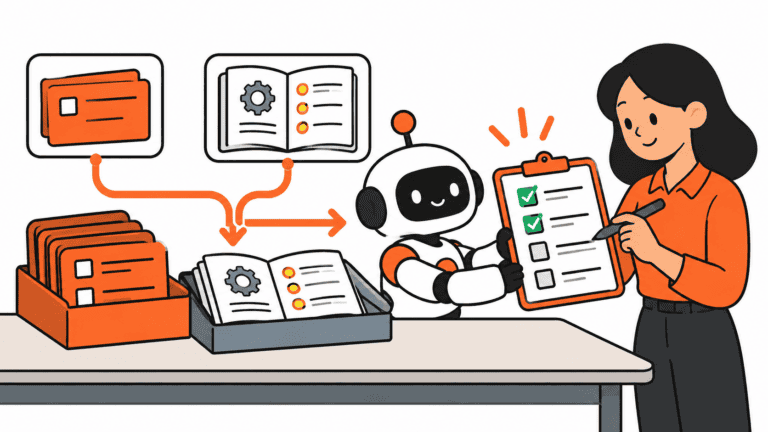
Feed GPT-5.6 a completed checklist, a few examples, and your desired format. Ask it to produce a first draft of an SOP with a “Needs human decision” section. That gives an operator a page to improve instead of a blank page to fear.
It is the same reason our operations prompt library focuses on preparation work: the first draft is not the final decision, but it saves real time.
3 things to keep human

1. Customer commitments
Do not let a model promise a delivery date, price, refund, exception, or scope change without a person approving it. A polished message can still contain an expensive mistake.
2. Money, people, and policy decisions
Payroll, hiring, performance issues, contract interpretation, and policy exceptions need accountable judgment. AI can prepare a summary or a draft. It should not make the final call.
3. Irreversible system actions
Deleting records, changing permissions, sending bulk messages, or updating live customer data should require an explicit human approval step. If the action cannot be easily undone, the review gate belongs before the click, not in a retrospective.
Run a two-week test before changing your workflow
Pick one narrow task. Run it 20 times. Track four things:
- How long the task took before and after
- How often the output needed a material correction
- What information the model was missing
- Whether a reviewer could verify the result quickly
If it saves time and stays easy to check, expand the workflow one step. If it creates more review work than it removes, stop. “The new model is better” is not a business case. A GPT-5.6 for Operations test is useful only when a repeatable result beats the old process.
For work that must move data between tools on a schedule, pair the human-review rule with a clear automation path. Our n8n automation ideas show the kind of small, bounded jobs that are worth automating first.
The takeaway
GPT-5.6 gives operations teams more choice, not less responsibility. When you use GPT-5.6 for Operations, keep the smaller tiers for bounded preparation work and reserve the higher-capability tier for complex analysis that a person will inspect. Keep commitments, money, people decisions, and irreversible actions behind a human approval step.
That is not cautious for the sake of it. It is how AI becomes useful enough to keep.